
Congregation of Jesus Mary Joseph
(JMJ)
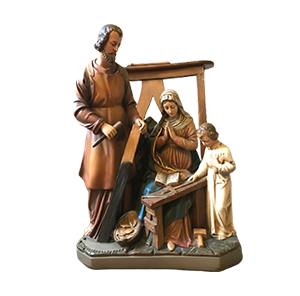
Wolff’s Contemplation on St. Joseph
09 Mar 2026 - 31 Mar 2026
In the book Consideration and Ground Rules, Fr. Wolff presents a beautiful contemplation on St. Joseph. He sees Joseph not only as a protector, but as a responsible father to Jesus, a hardworking head of the Holy Family, a privileged man who died in the presence of Jesus and Mary, and even as one who announced the good news that, through Christ, the doors of heaven would be opened.
As we celebrate the feast of St. Joseph on March 19, during the season of Lent, this reflection of Fr. Wolff helps us to enter more deeply into prayer. He writes: “How holy must Joseph’s death have been, since he died in the company of Jesus and Mary? He had done and suffered so much out of love for Jesus that God did not want him to suffer any more through Jesus’s sorrows, for his heart would have been pierced with a sword, just like Mary’s soul. That is why we read that he died before Jesus’ suffering; this is what the history of his holy life teaches us. But with what joy Joseph must have died, having Jesus and Mary with him! He was sent ahead to bring great joy to the souls who, although they had earned heaven, could not yet enter it, since the door would remain closed after Adam’s sin until Jesus’ ascension. When Joseph came to these saints, he told them that the Saviour had been born and that heaven would soon be opened. What joy this must have caused! I, too, will be able to die peacefully if I now live strictly according to the rules of the Society. Many of my fellow sisters, who excelled in maintaining the rule, died peacefully, joyfully, and contentedly (Grondregels, 418).”
In this reflection, Fr. Wolff refers to a traditional Christian belief called limbus patrum, the “limbo of the fathers.” This expression refers to the righteous people of the Old Testament, such as Abraham, Moses, and the prophets, who had lived faithfully but could not yet enter heaven because Christ had not yet completed His saving work. According to this tradition, heaven was opened only through the death, resurrection, and ascension of Jesus. Until then, the just were waiting in hope. This place of waiting is also called the “bosom of Abraham.” It is mentioned in the teaching of the Church, including the Catechism, not as a place of punishment, but as a state of hopeful expectation (Raymond de Souza, The Holy Week Shadows of St. Joseph: Holy Saturday).
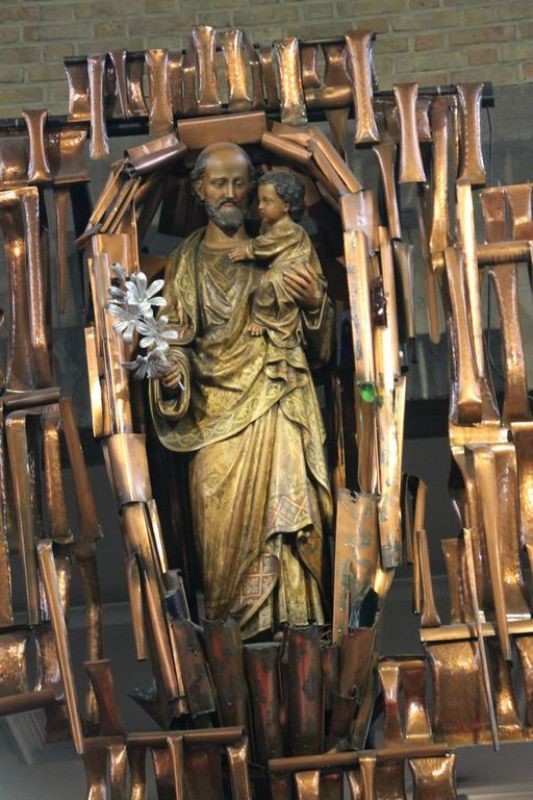
Statue of St. Joseph, Sint-Antoniuskapel, Leuven, Belgium
Fr. Wolff presents this beautiful and hopeful image: St. Joseph, who died before Jesus’ public ministry, is among these righteous souls. When he arrives, he brings them joyful news: the Saviour has been born, and heaven will soon be opened. We can imagine the joy that filled those waiting hearts. Joseph, who cared for Jesus on earth, now becomes the bearer of hope to those awaiting redemption. But Fr. Wolff does not stop at imagination. He then turns the reflection toward us, making it concrete and deeply personal. His words remind us that our own life, too, is a journey toward the fullness of joy. Just as Advent is a time of waiting, so also Lent is a season of waiting and preparation. Through baptism, we already belong to Christ. Through our vowed life, we are consecrated to Him. Yet we are still on the journey. We have not yet entered the fullness of heaven. In a certain sense, our whole life is a waiting in hope. St. Joseph teaches us how to wait, not with anxiety, but with trust. He shows us that holiness is not something extraordinary, but faithfulness in ordinary life. If we live our vocation by daily entrusting our imperfect selves to God, we too may hope for that peaceful joy of which Fr. Wolff speaks. May St. Joseph accompany us during this Lenten season. May he help us to live faithfully today, so that one day we may enter fully into the joy that he announced to the waiting souls.