
Congregation of Jesus Mary Joseph
(JMJ)
The Carmelite Influence in Fr. Wolff’s Spiritual Vision for His Sisters
01 May 2026 - 31 May 2026
The Carmelite Influence in Fr. Wolff’s Spiritual Vision for His Sisters
Among the women saints mentioned in the writings of Fr. Mathias Wolff, the names most familiar to us are Teresa of Ávila and Catherine of Siena (SBL, 36). Yet, in the Grondregels, Fr. Wolff also refers on three occasions to another remarkable woman saint whose witness seems to have deeply touched him: Mary Magdalene de’ Pazzi, whose feast the Church celebrates on May 25.
Born in Italy in 1566, Mary Magdalene de’ Pazzi was a Carmelite mystic whose life was marked by intense prayer, deep union with God, and extraordinary acts of penance. From a young age, she embraced a life of radical self-denial. Through fasting, vigils, bodily mortification, and heroic acts of charity, even tending to the wounds of those suffering from leprosy, she sought to share in Christ’s suffering and to offer herself completely in love. Her life was also marked by profound mystical experiences during prayer, drawing her ever deeper into the mystery of God’s love.
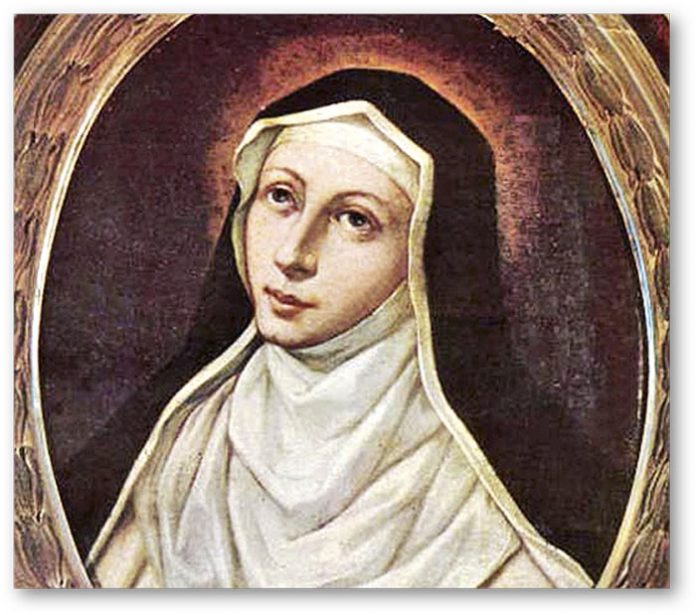
What seems to have particularly attracted Fr. Wolff was her spirit of mortification and her willingness to suffer for the sake of love. He quotes her striking words: “Not to die, but to suffer (Grondregels, 128)” In this brief phrase lies a profound spirituality, not a search for suffering in itself, but a readiness to embrace sacrifice, endurance, and self-giving love as a path of union with Christ. Fr. Wolff also points to her austere fasting on bread and water (Grondregels, 193) and her faithful preservation of virginal purity (Grondregels, 412), holding her up as an example of discipline, fidelity, and wholehearted dedication to God.
By invoking St. Mary Magdalene de’ Pazzi, Fr. Wolff is inviting us to reflect on an essential dimension of religious life: that love is proven in sacrifice, fidelity is strengthened through discipline, and holiness often grows in the quiet acceptance of suffering borne with grace. Her witness challenges us, not necessarily to imitate her severe penances, but to ask ourselves: How willing are we to endure discomfort, surrender our self-will, and offer our lives generously for God and for others?
In remembering this Carmelite saint, we are reminded that holiness is not merely found in extraordinary mystical gifts, but in an ordinary life made extraordinary through radical love, steadfast commitment, and a heart wholly surrendered to God.